Historic Origins of Head Shaving for Head Lice Prevention - What has Head Shaving for Head Lice Lead to Through History to Today? - Schooltime Products Lice Learning Center

Historic Origins of Head Shaving
for Head Lice Prevention

What has Head Shaving for Head Lice Lead to Through History to Today?

Historic Origins of Head Shaving for Head Lice Prevention

What has Head Shaving for Head Lice Lead to Through History to Today?

Historically, head shaving for lice prevention and control dates back to ancient Egypt around 1550 B.C. Priests were encouraged to shave their heads to prevent lice from having a place to live [1]. Similarly, by 450 B.C., Egyptians recommended shaving the entire body to eradicate lice [2]. This method was effective because lice need hair to attach their eggs (nits) and to move around. Without hair, lice have a much harder time surviving and reproducing. Besides the obvious benefit of lice control, both men and women in ancient Egypt valued smooth, hairless bodies as a sign of youth and vigor; hair removal was seen as a sign of cleanliness and social status.

Historical Timeline of Societies Using Head Shaving for Lice Prevention

  • Ancient Egypt (1550 B.C.): Priests shaved their heads to prevent lice [2-].
  • Ancient Peru (1025 B.C.): Evidence of lice found on mummies [3].
  • Ancient Greece and Rome (400 B.C.): Shaving was common among soldiers to prevent lice and for hygiene [6].
  • Medieval Europe: Monks and religious figures often shaved their heads (tonsure) for religious reasons and to prevent lice [6].
  • Modern Times: Shaving is less common but still used in some cases for lice prevention [5].

Classes of People Who Practiced Head and Body Shaving

  • Priests and Religious Leaders: In ancient Egypt, priests shaved their heads for cleanliness and to prevent lice [3].
  • Soldiers and Military: In ancient Greece and Rome, soldiers shaved their heads to prevent lice and for practical reasons during combat [6].
  • Monks and Religious Figures: In medieval Europe, monks practiced tonsure, which involved shaving part of their heads [6].
The oldest known sentence written in the first alphabet was discovered on an ancient ivory lice comb, dated to about 3,700 years ago, unearthed at an Israeli archaeological site called Lachish - Schooltime Products Lice History Articles

Photo Credit: Dafna Gazit, Israel Antiquities Authority

The oldest known sentence written in the first alphabet was discovered on an ancient ivory comb, dated to about 3,700 years ago.

The comb was unearthed in 2016 from an Israeli archaeological site called Lachish. However, the minuscule one- to three-millimeter letters were overlooked until 2021, when research associate Madeleine Mumcuoglu at the Hebrew University of Jerusalem noticed the sentence while zooming in on a photo of the comb.

Earliest Methods of Shaving Heads and Bodies

  • Prehistoric Times (100,000 B.C.): Early humans used seashells like tweezers to pluck hair [7].
  • Ancient Egypt (3000 B.C.): Egyptians used copper and bronze razors, as well as depilatory creams made from quicklime and arsenic [8].
  • Ancient Greece and Rome (400 B.C.): Greeks and Romans used sharpened flint and bronze razors [9].

Evolution of Shaving Methods

  • Prehistoric Times: Plucking hair with seashells [7].
  • Ancient Times: Use of copper, bronze razors, and depilatory creams [8]].
  • Middle Ages: Introduction of more sophisticated metal razors [6].
  • Modern Times: Development of safety razors and electric shavers [6].

Effectiveness of Shaving for Lice Control

Shaving the head or cutting hair very short can be effective in controlling lice infestations because it removes the environment where lice thrive [4]. However, it is not always necessary and can have psychological impacts, especially on children [11]. Modern treatments often involve the use of medicated shampoos and fine-toothed combs [10].

The Role of Barbers in Ancient Egypt

Head and body lice prevention played a significant role in the origin and evolution of barbering in ancient Egypt. In ancient Egypt, barbers held a highly esteemed position in society. Their role was multifaceted and extended beyond just cutting hair. Here are some key aspects of their responsibilities and significance:

Roles and Responsibilities

  • Grooming: Barbers, or “shave masters,” were specially trained to remove body hair using wooden razors. They were responsible for shaving not only the head and face but also the body hair of priests and other individuals [18]. Priests were required to maintain a clean-shaven appearance as part of their religious duties [12].
  • Tools: They used bronze razors and other grooming tools, which have been found in tombs, indicating their importance [12].

Head Lice Prevention

  • Hygiene and Cleanliness: The hot climate of Egypt made long hair a breeding ground for pests like lice. To combat this, Egyptians often shaved their heads to maintain hygiene and cleanliness [16].
  • Social and Religious Practices: Priests, in particular, were required to keep their heads shaved as part of their religious duties. This practice was believed to prevent lice infestations and maintain purity [16].

Body Lice Prevention, Body Shaving, Body Waxing

  • Priests and Rituals: Body lice prevention was also crucial, especially for priests who needed to be clean-shaven to perform religious ceremonies. Documents from around 2500 B.C.E. indicate that priests regularly shaved their bodies as part of their physical preparation for rituals [18].
  • Early Body Hair Removal Methods & Tools:body hair was removed using pumice stones, shells, and tweezers [19]
  • Body Waxing: Egyptians were among the first to practice waxing. They used a method called “sugaring,” which involved a sticky paste made from sugar, lemon juice, and water. This paste was applied to the skin and then quickly removed to pull out hair.

Evolution of Barbering

  • Multifaceted Role: Barbers in ancient Egypt were highly regarded and performed a variety of grooming tasks. Their responsibilities included cutting and styling hair, trimming beards, and shaving heads and bodies [17].
  • Cultural Significance: The importance of personal grooming and hygiene in Egyptian society elevated the status of barbers, making them essential members of the community [17].

Cultural Significance

  • Social Status: Barbers were considered essential members of society and were often reserved for the wealthy and privileged4. They played a crucial role in maintaining the appearance of pharaohs and high-ranking officials [14].
  • Rituals and Afterlife: Barbers were so highly regarded that nobles had personal barbers accompany them even in death to maintain their appearance in the afterlife [13].
  • Passing Down Skills: Barbering skills were often passed down through generations, ensuring the continuity of their craft [12].

Barbers in ancient Egypt were more than just groomers; they were integral to the social and cultural fabric of their time. Their skills and services were highly valued, and they played a significant role in the daily lives and rituals of the ancient Egyptians. The prevention of head and body lice was a key factor in the development of barbering practices in ancient Egypt. Barbers played a crucial role in maintaining hygiene and cleanliness, especially for priests and high-ranking officials.


Head Shaving for Lice Prevention Contributes to Earliest Use of Wigs in Egypt. - Schooltime Products Lice History Articles

Photo Credit: Canva

Head Shaving for Lice Prevention Contributes to Earliest Known Use of Wigs in Egypt.

Wigs in ancient Egypt have a fascinating history and served multiple purposes. While direct evidence of head shaving for lice control before 1550 BC is lacking, it’s reasonable to infer that similar motivations could have existed as early as 3400 BC. The use of wigs to protect shaved heads from the sun suggests that head shaving was already a common practice, possibly for hygiene reasons, including lice control. While we can’t definitively prove that head shaving for lice control dates back to 3400 BC, the use of wigs during that time can be seen as indirect evidence supporting this theory. The motivations for head shaving likely included both practical and hygienic reasons, similar to those documented in later periods.

Resources

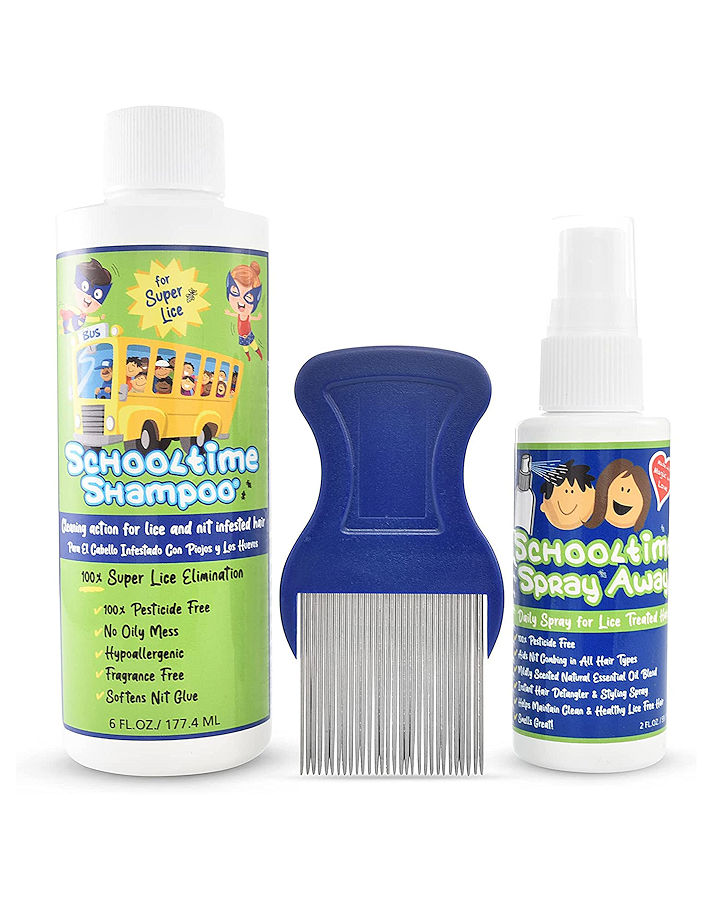
Don't forget to pack your Schooltime Head Lice Travel Kit no matter where you are going!

Schooltime® 3-Piece
Lice Elimination Travel Kit
Don’t leave home without it!

Kit contains a 6 oz Bottle of Schooltime Shampoo, a 2 oz Bottle of Spray Away Instant Hair De-Tangler, and the Schooltime Stainless Steel Comb. The Hair detangler for easy combouts, anti frizz, or daily leave in styling spray to help maintain lice free hair and scalp.


Schooltime Lice control Products - Safe Lice Removal Shampoo
Know what the 'Essential Elements' are for effective head lice control.
Frequently Asked Questions About Head Lice from Schooltime Products
Schooltime® 100% Complete Lice Elimination Kit - Schooltime Products Head Lice Elimination Products

What Schooltime® Customers Say

Schooltime Products Customer Testimonials

J. Mayfield

“I was tired of using harsh lice shampoos on my daughter, especially since they did not work. Schooltime Shampoo® got rid of the lice and was gentle to use.”

Schooltime Products Customer Testimonials

N. Paul

“My three year old daughter recently changed daycares, and one of the first things she came home with was headlice. I had the opportunity to use your product and truly believe that it is wonderful.”

Schooltime Products Customer Testimonials

T. Gullett

“I was very impressed with the shampoo. It contained no harmful chemicals, yet it rid two of my student’s hair of lice and left the hair soft, shiny and healthy looking.”

Schooltime® Products for Head Lice Elimination & Prevention

Schooltime® Lice Elimination and Maintenance Shampoo 12oz.

Schooltime® Shampoo 12oz.

Complete Lice Elimination Kit
Complete Lice Elimination Kit

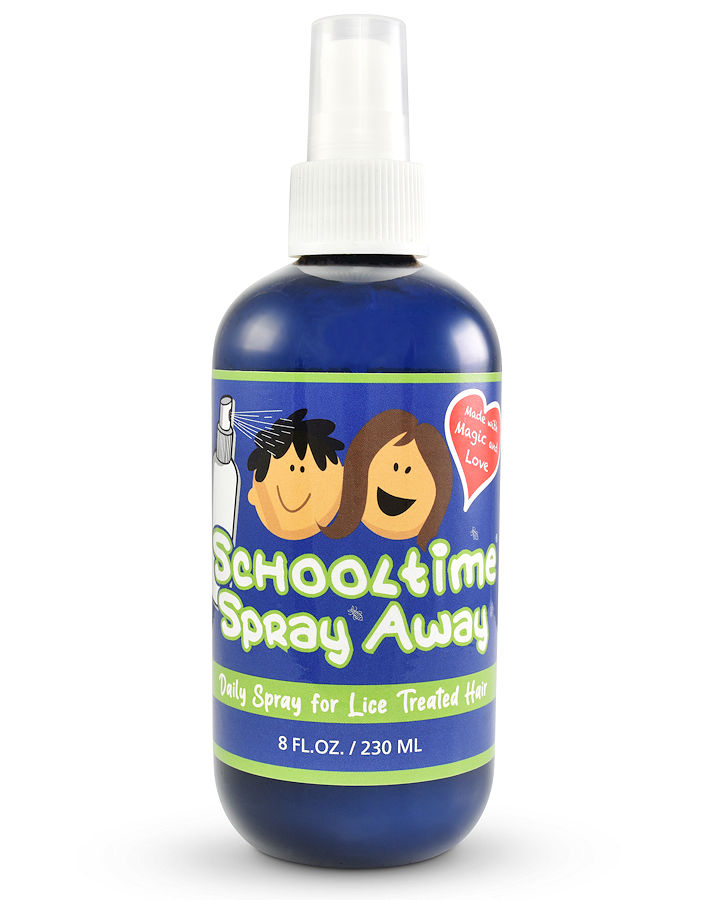
Schooltime® Spray Away
Schooltime® Spray Away

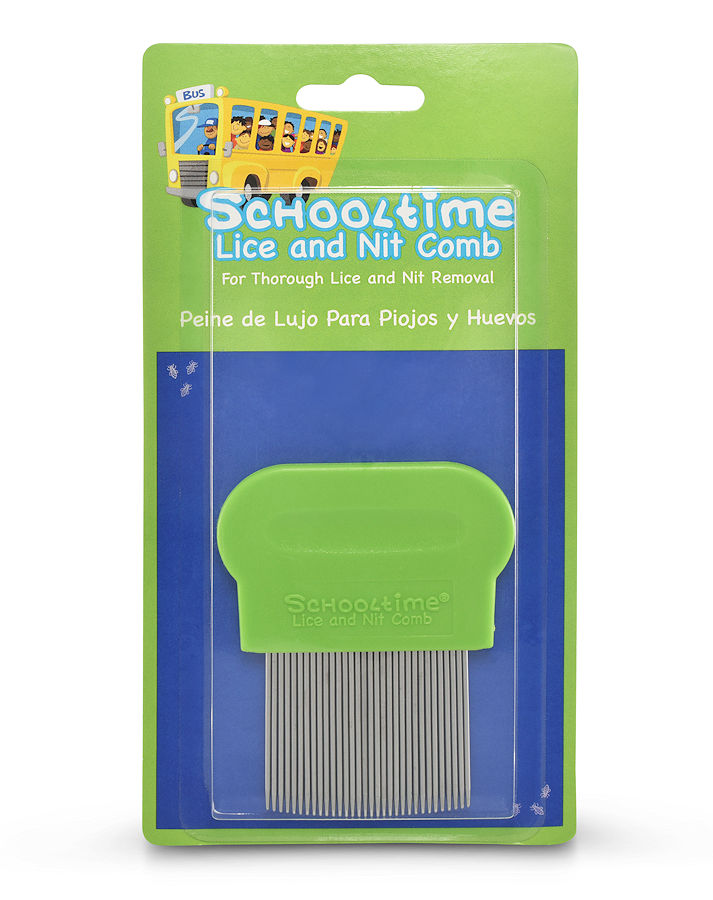
Metal Lice & Nit Removal Comb

Metal Lice & Nit Removal Comb